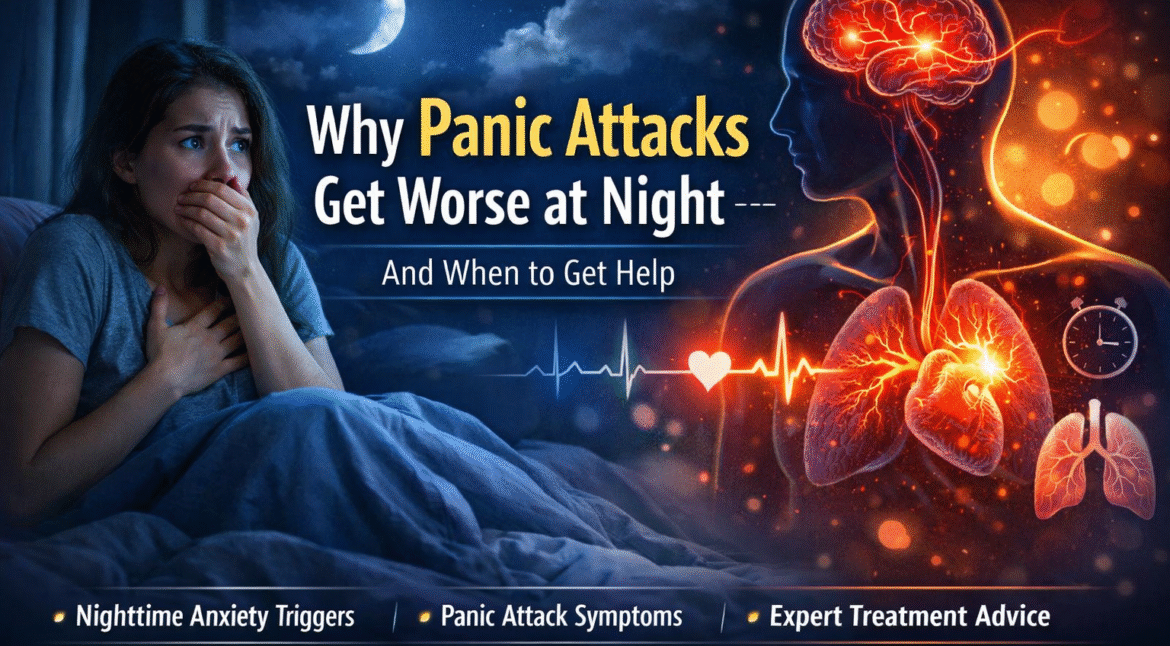
Why Panic Attacks Are Getting Worse at Night And When to Get Help
If you experience panic attacks that seem to intensify at night, you’re not imagining it—and you’re not alone. Many people with an anxiety disorder or panic disorder report that their most frightening episodes occur after dark. These sudden waves of fear often come with intense anxiety symptoms and unmistakable panic attack symptoms, disrupting sleep and peace of mind. Understanding why this happens is the first step toward relief and recovery.
What causes panic attacks after dark?
At night, distractions fade and the body’s internal signals become louder. For individuals with chronic anxiety, this can trigger a heightened autonomic nervous system response. When the brain misinterprets normal sensations—like a racing heart or shallow breathing—it can activate the fight or flight response, setting off panic.
Other common nighttime triggers include:
Fatigue and depleted emotional reserves
Stress and anxiety carried from the day
Hormonal shifts (like cortisol changes)
Silence and darkness, which amplify bodily awareness
This explains why panic attacks happen suddenly, even when you’re trying to rest.
Difference Between Anxiety and Panic Attacks
While anxiety and panic are closely related, they’re not the same.
Anxiety builds gradually and may persist for hours or days.
Panic attacks peak abruptly, often within minutes, with intense fear and physical symptoms.
Understanding the difference between anxiety and panic attacks helps people seek the right mental health support instead of dismissing symptoms as “just stress.”
Can Anxiety Cause Physical Symptoms at Night?
Yes. Many people ask, can anxiety cause physical symptoms? The answer is absolutely.
Common nighttime panic attack symptoms include:
Chest tightness or pain
Shortness of breath
Dizziness or nausea
Sweating or chills
A sense of losing control or fear of dying
These are not dangerous, but they feel alarming—especially in the quiet of the night.
How Long Do Panic Attacks Last? Are They Dangerous?
Most panic attacks last 10–30 minutes, though the after-effects can linger. A frequent concern is, are panic attacks dangerous? While they are not life-threatening, repeated attacks can worsen mental well-being and sleep quality if left untreated.
How to Stop a Panic Attack at Night
If you’re in the middle of one:
Focus on slow, deep breathing
Ground yourself by naming five things you can see
Walk or run fast to remove excess energy
Count backwards from 100
These strategies can help calm the nervous system—but they’re not a substitute for professional care.
When to Get Help for Panic Attacks
Seek expert care if:
Nighttime attacks are frequent or worsening
You avoid sleep due to fear
Symptoms interfere with daily life
A psychiatrist for anxiety or psychiatrist for panic attacks can provide an accurate diagnosis and personalised treatment plan. If you’re exploring anxiety treatment in Mumbai, panic attack treatment in Mumbai, or anxiety counselling in Mumbai, timely support from a psychiatrist can make a life-changing difference.
Conclusion
Nighttime panic attacks can feel overwhelming, but they are treatable. With the right understanding, coping strategies, and professional care for anxiety disorder or panic disorder, restful nights and emotional balance are possible. If symptoms persist, reaching out for expert mental health care isn’t a weakness—it’s a powerful step toward healing.


 Book Consultation